Photo by Victor Serban on Unsplash
When should you pick sloe berries so they’re not bitter, and how do you know they’re properly ripe? What benefits do they offer, how do you eat them, and what else can you harvest from the blackthorn shrub?
What are sloe berries
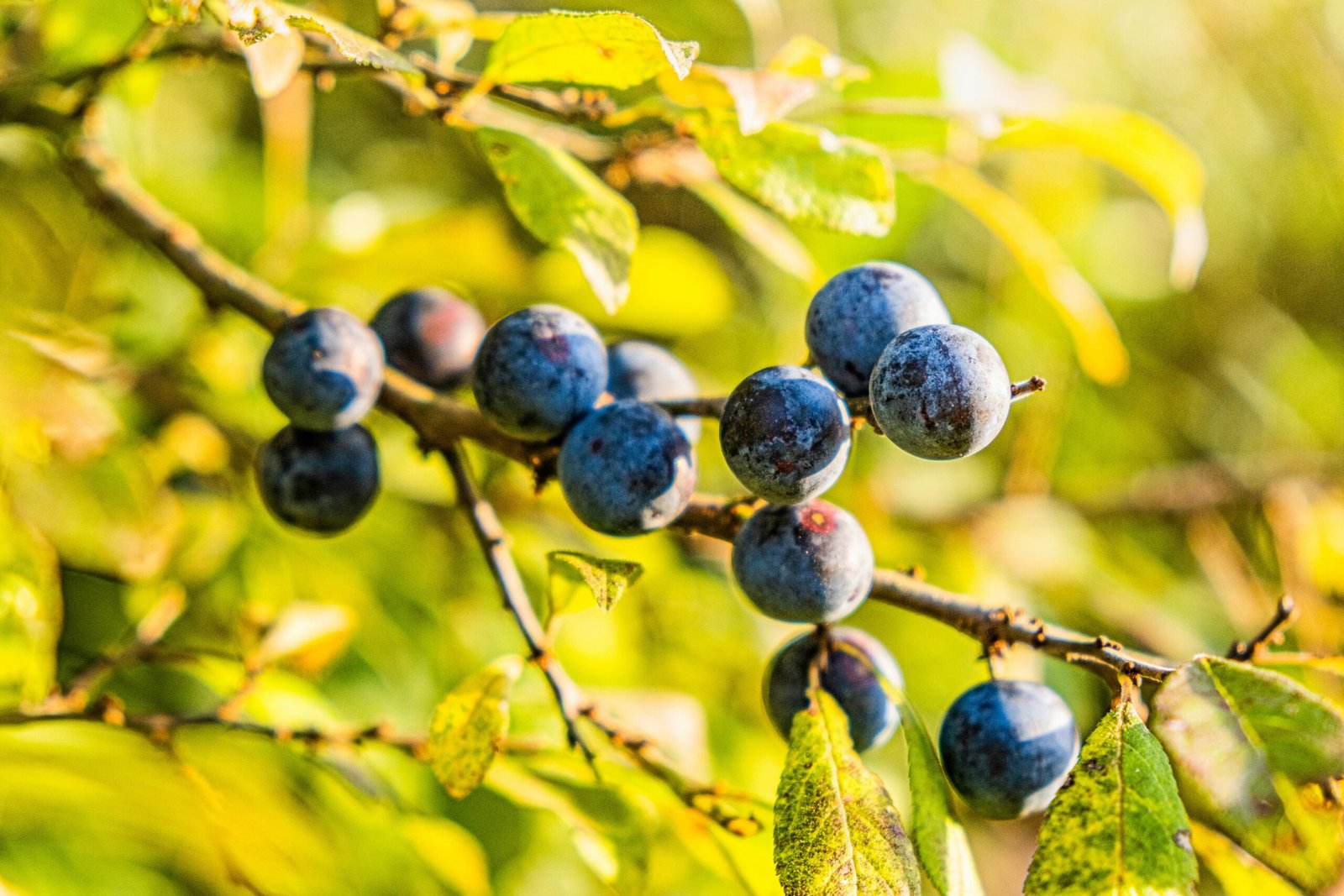
Along with sea buckthorn, rosehips, cranberries, and blueberries, sloes fall into the wild berry category. They turn dark blue-black when fully ripe, look similar to plums in shape but smaller, and have a slightly tart flavor.
They’re used both in cooking — jam, compote, syrup, preserves, wine, liqueur — and as a natural remedy, in the form of tea and tinctures.
When picked at the right time, sloes taste good and pack a solid amount of nutrients and antioxidants.
Sloes are the fruit of the blackthorn shrub (Prunus spinosa). It grows wild in both lowland and mountain areas, near forests and roadsides, and can reach up to 3 meters tall.
Besides the fruit, the blackthorn’s leaves, buds, flowers, bark, and young branches are also used medicinally.
Harvesting: When to pick sloe berries
Sloes are typically harvested in October and November. Only pick them once they’ve turned a deep purple color and feel soft to the touch.
Another sign they’re ripe enough to pick is when you start seeing berries dropping on the ground beneath the shrub.
Sloes are sour and bitter if picked too early. To eat them raw, or to get a good flavor in jams and syrups, wait until they’ve been through at least one frosty morning.
Frost mellows out that astringent bitterness and makes them suitable to eat raw, without cooking.
If you pick sloes before they’ve had a frost, pop them in the freezer overnight instead. It has the same sweetening effect.
You can dry the berries for tea by spreading them out on paper in a well-ventilated room for 2-3 weeks.
They’re ready once they turn brittle. Store them in paper bags in a pantry for the best results.
When to harvest blackthorn flowers and leaves
Flowers should be picked gradually, right as they bloom. This happens before the leaves appear, typically late February/March into early April depending on weather. They’re about 1.5 cm across, with 5 white petals.
Leaves are harvested in July, then dried and used in teas.
A word of caution: since the shrub is covered in thorns, wear long sleeves and gardening gloves when picking the fruit, flowers, or leaves.
What sloe berries are good for: Benefits and nutrients
Sloe berries are rich in vitamin C, vitamin E, copper, iron, potassium, magnesium, manganese, phenols, and flavonoids.
They support better digestion, and help with respiratory conditions, tooth decay, kidney and bladder issues, and heart conditions.
Sloes help detoxify the body, reduce inflammation in the mouth and throat, and act as a natural energy booster. They have the highest concentration of active compounds when harvested after the first frost.
Clear toxins from the blood. Blackthorn flowers are used to help prevent gout and rheumatism. The plant is rich in rutin, a compound that supports detoxification, and has diuretic-like cleansing properties.
Sloes support digestion
Sloe jam and preserves can help soothe stomach issues and indigestion.
Sloes are also good for treating constipation, as well as diarrhea, reducing bloating, and easing swallowing difficulties.
To stimulate appetite, blackthorn flower tea is recommended. Make it with two teaspoons of dried flowers steeped in a cup of hot water.
Support kidney and bladder health
Blackthorn flowers can also help calm bladder spasms and stomach cramps.
Because they have diuretic properties and help flush excess fluid from the body, they support kidney health and help eliminate the buildup of sediment and stones in that area.
Good for cardiovascular health
Prunus spinosa contains flavonoids like quercetin and kaempferol, along with phenolic acids and anthocyanins, which help protect the heart muscle from inflammation and oxidative stress.
Helps with respiratory issues
Blackthorn flowers have anti-inflammatory, antibacterial, and expectorant properties, and are recommended for treating respiratory conditions.
Helps prevent tooth decay
The antibacterial and antioxidant properties of this shrub also make it useful as a medicinal plant for cavity prevention.
Good for chronic fatigue and insomnia
To help with insomnia, anxiety, and fatigue, you can make a tonic tea from blackthorn flowers. Simmer half a teaspoon of dried flowers in 200ml of water for 5 minutes.