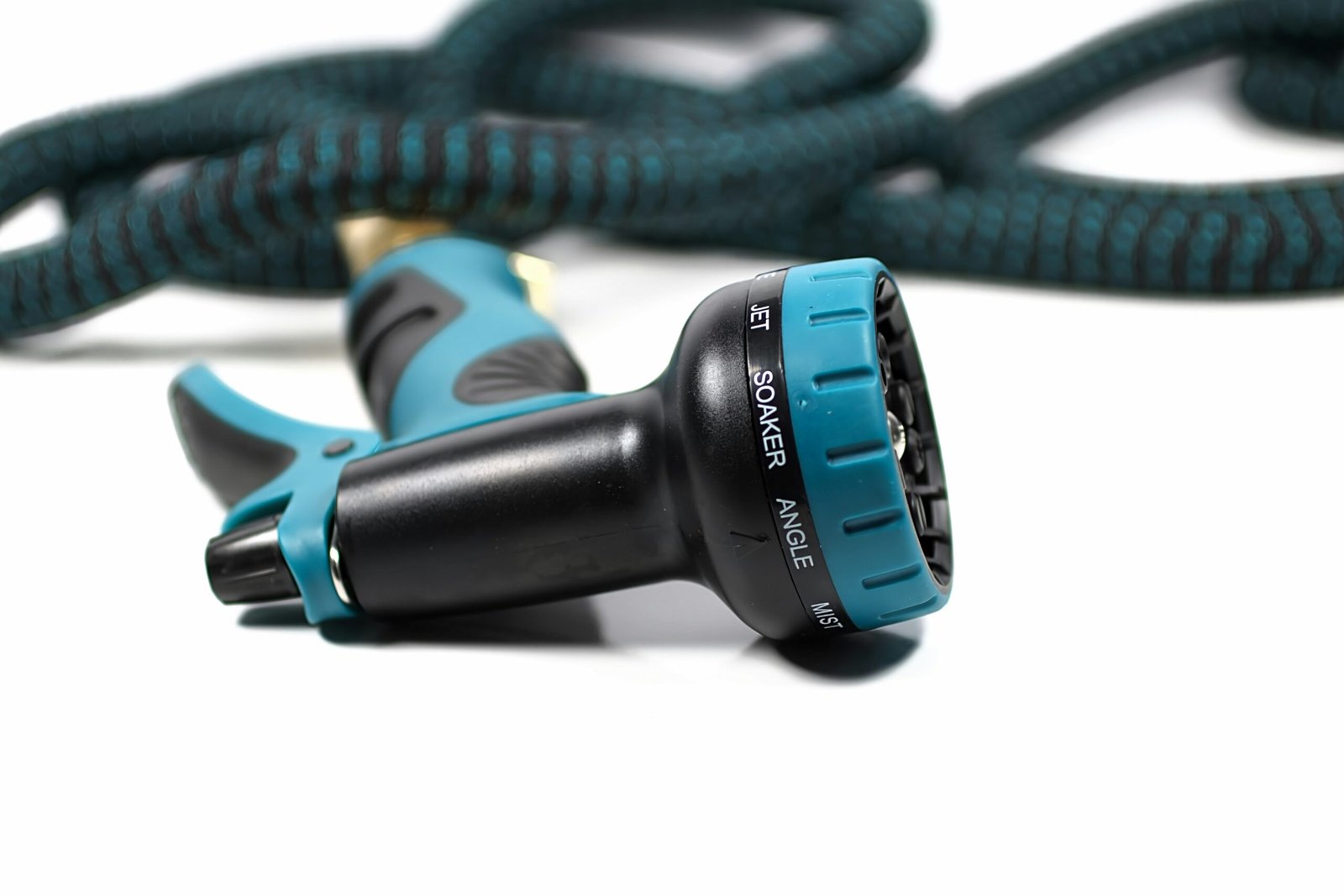
Expandable hoses take up less storage space, tend to be lighter, and are great for yards that don’t need a ton of coverage.
You’ll appreciate one of these if you need to water a greenhouse or cold frame, keep a small-to-medium garden or lawn watered, hose down your driveway, wash the car, or rinse off outdoor rugs.
They’re easy to use, simple to store, and durable — as long as you pick the right one.
Below are a few popular models, plus what to actually look for when choosing an expandable hose.
In this guide:
When do you need an expandable hose?
How do you choose the best one?
How long should it be?
How do you pick the right diameter?
Rubber or plastic — which is better?
Do you need a spray nozzle?
When Do You Need an Expandable Hose?
Expandable hoses are designed specifically to save space when they’re not in use.
Their biggest advantage over a traditional hose is how easy they are to coil up and store after use.
Because they’re so compact, expandable hoses are a great fit for households with limited storage space for garden equipment (like a garage or shed).
They’re the best option for:
- greenhouses, cold frames, and small-to-medium gardens
- front yard green space
- lawns
- patio or balcony container plants
- washing the car
- rinsing off walkways and driveways
- washing outdoor rugs, etc.
How Do You Choose the Best Expandable Hose?
Expandable hoses are similar enough to traditional garden hoses, from a technical standpoint, that you can use roughly the same criteria to evaluate them: length and diameter, working pressure, materials, and included accessories.
That said, there are a few things specific to expandable hoses worth keeping in mind.
How Long Should an Expandable Hose Be?
Most well-priced expandable hoses fall somewhere between 25 and 200 feet in maximum length (when fully filled with water). The most common sizes are 25 ft, 50 ft, 100 ft, 165 ft, and 200 ft.
When deciding which length is right for you, factor in the distance between your water source and the farthest point you’ll need to reach.
Keep in mind that not every hose hits the exact maximum length listed by the manufacturer — it’s safe to expect a margin of error of a few feet either way.
How Do You Choose the Right Diameter?
Hose diameter depends on both your water source and the hose’s length.
If you have access to a pump or faucet with good water pressure, you can comfortably go with a larger-diameter expandable hose, even at 100, 165, or 200 feet.
If your water pressure is already on the lower side, a larger diameter will slow the water flow down too much — in that case, a narrower expandable hose is the better choice.
The diameter of your water source matters too — if it matches your hose’s diameter, you’ll be able to use the fittings that typically come included. If not, you’ll need an adapter.
The most common sizes are:
- 1/2 inch = 13mm
- 5/8 inch = 16mm
- 3/4 inch = 19mm
- 1 inch = 24.5mm
Rubber or Plastic — Which Expandable Hose Is Better?
Unlike a standard garden hose, a true expandable hose (not the coiled kind) has two components: an inner tube and an outer protective layer.
Both have a certain amount of stretch that allows the hose to expand as it fills with water.
The inner tube can be made from rubber, plastic, or PVC. Rubber is more durable, holds up better to temperature swings, but is also heavier and a bit more expensive.
PVC versions are lighter and more affordable, but won’t last quite as long as rubber ones.
Beyond the material itself, the number of layers in the inner tube also matters — more layers generally means better durability.
Hoses typically wear out most often from punctures or abrasion.
The outer layer helps a lot here — it’s usually made from a woven textile material, typically polyester.
Premium models use a tougher, UV-treated fabric that resists friction and puncturing better.
Are you mostly going to use the hose indoors — for patio or balcony plants — or to wash the car? Will it avoid rough or sharp surfaces?
If so, you can comfortably get away with a model that has just 1 or 2 inner layers. For this kind of light use, coiled expandable hoses (without the extra protective layer) are also a solid option.
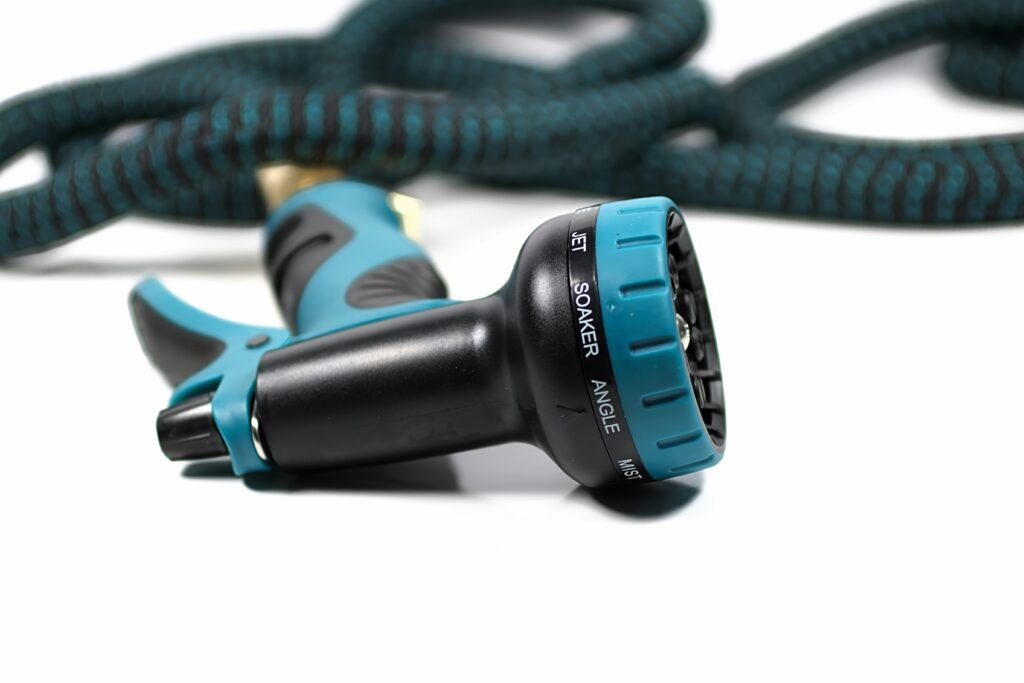
Do You Need a Spray Nozzle?
Technically, you can get by without one — but in practice, it’s much more convenient and efficient, especially if you’re using the hose to water your garden.
A jet of water that’s too strong can uproot seeds planted near the surface, and can even damage more delicate plants.
The best spray nozzles are the ones that let you control water pressure, not just the spray pattern.
You can also use different spray settings to control how the water impacts your leaves and soil.
For situations where you need a gentle touch, go with a fine mist setting; for speed and efficiency, use a wider jet with larger water droplets.