When should you pick plum leaves to get the most out of their benefits? What do they do for your health? Plum leaves show up in traditional remedies, and here’s how to use them properly in tea.
Keep reading to learn more.
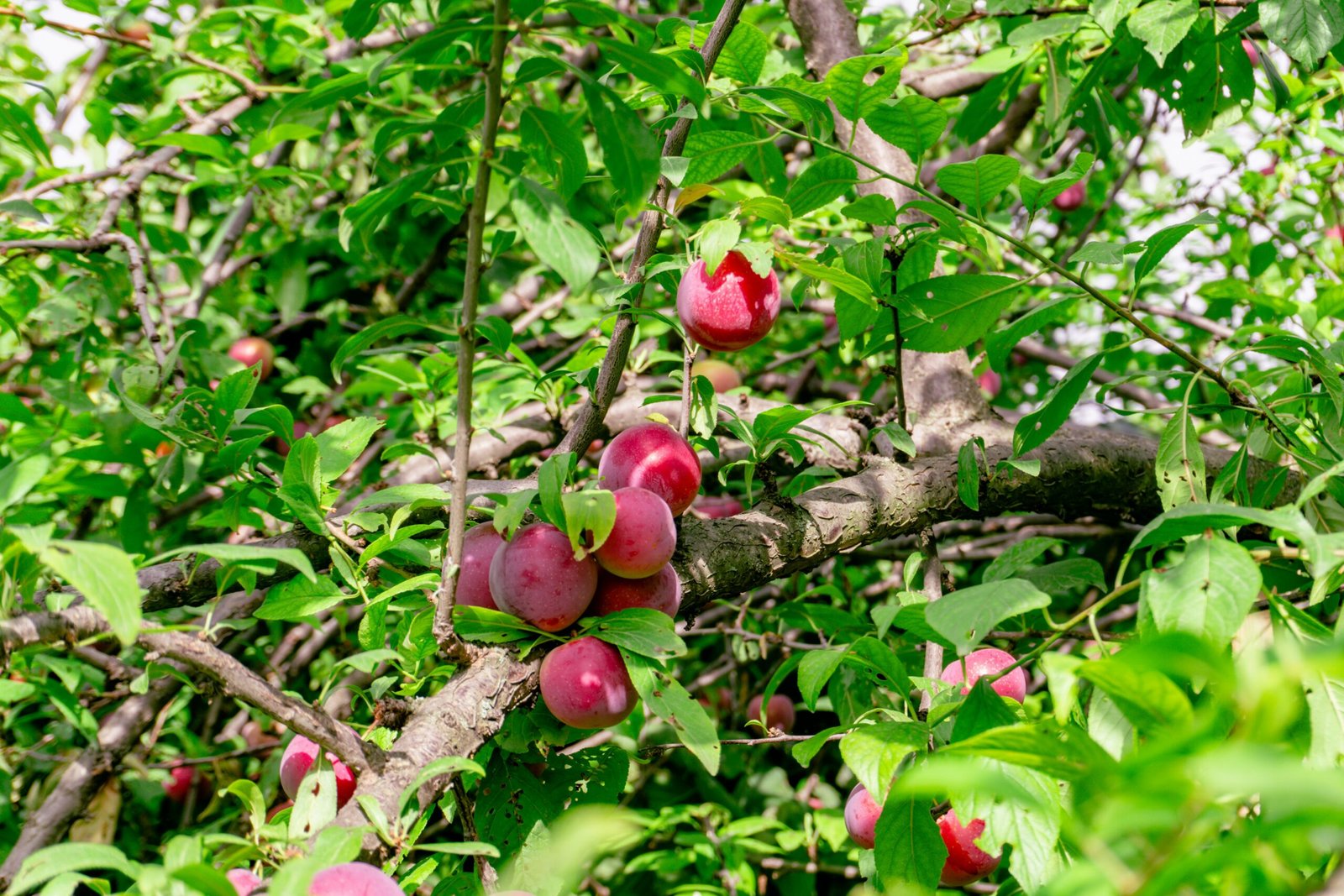
Plum trees are a hugely popular fruit tree here, with all sorts of varieties and harvests. Plums are especially prized for their sweet, fragrant fruit. We eat them fresh, in compotes, jam, preserves, fruit butter, or stewed fruit.
They’re also incredibly good for you — among their best-known benefits are their laxative properties, their ability to help lower cholesterol, and their role in treating iron-deficiency anemia.
But it’s not just the fruit that helps with health issues. Plum leaves have plenty of benefits of their own, too, and help with several fairly common conditions.
When to harvest plum leaves
Pick plum leaves between June and September, before they start showing signs of wear. Once they begin turning yellow, they no longer have the same nutrient and active-compound content.
Dry them the same way you would mint, quince leaves, sloe berries, or rosehips, and store them in paper bags somewhere cool and dry.
Plum leaves — benefits and properties
Plum leaves contain isatin, an active compound with laxative properties that’s highly effective for treating constipation. They’re also great for getting rid of intestinal worms like roundworms and pinworms.
Plum leaves are perhaps best known for their benefits to blood circulation. They help with anemia, hemorrhoids, arteriosclerosis, and thrombophlebitis, as well as fatigue and stress.
Plum leaves are also useful for weight loss. They help regulate the absorption of carbs and fats, limiting fat buildup around the abdomen and internal organs.
You can also turn to them to help bring down a fever, and they’re rich in antioxidants.
Plum leaves in traditional remedies
The simplest way to enjoy the benefits of plum leaves is to make tea with them. They’re also sometimes steeped in goat’s milk.
How to make plum leaf tea
Plum leaf tea is a highly effective natural laxative, great for treating constipation. To make it, put 25-30 plum leaves in a kettle or pot with a liter of water.
You’ll want to make a decoction, not an infusion — meaning the mixture needs to actually boil. Boil for 10-15 minutes to draw out the beneficial compounds from the leaves, let it cool, then strain.
A course of plum leaf tea for constipation typically lasts 4-5 days.
If you’ve dried and crushed your plum leaves, prepare the infusion using one tablespoon of dried leaves per cup of water.
Goat’s milk with plum leaves — a remedy for dissolving blood clots
One well-known remedy using plum leaves involves mixing them with goat’s milk. This is especially recommended for dissolving blood clots and treating conditions that affect blood vessels, like arteriosclerosis and thrombophlebitis.
This version calls for an infusion. Start by boiling a liter of goat’s milk. Once it’s boiling, add 8-10 plum leaves and let them steep for 10-15 minutes.
Strain the liquid, and once it’s cooled a bit, you can sweeten it with honey.
For this remedy, a 10-day course is typically recommended, with 2 cups a day of the goat’s milk and plum leaf infusion.